Breaking News

Popular News


Enter your email address below and subscribe to our newsletter
We live in a world that is finally waking up to the consequences of its choices. For decades, the fashion and manufacturing industries relied on two main materials: animal leather and synthetic plastics. While animal leather carries a heavy ethical and environmental burden, its synthetic counterpart—often marketed as “vegan leather”—is usually nothing more than hidden plastic. However, a quiet revolution is brewing in the heart of the textile world. Jute “leather” has emerged as a game-changing solution that bridges the gap between luxury and responsibility.
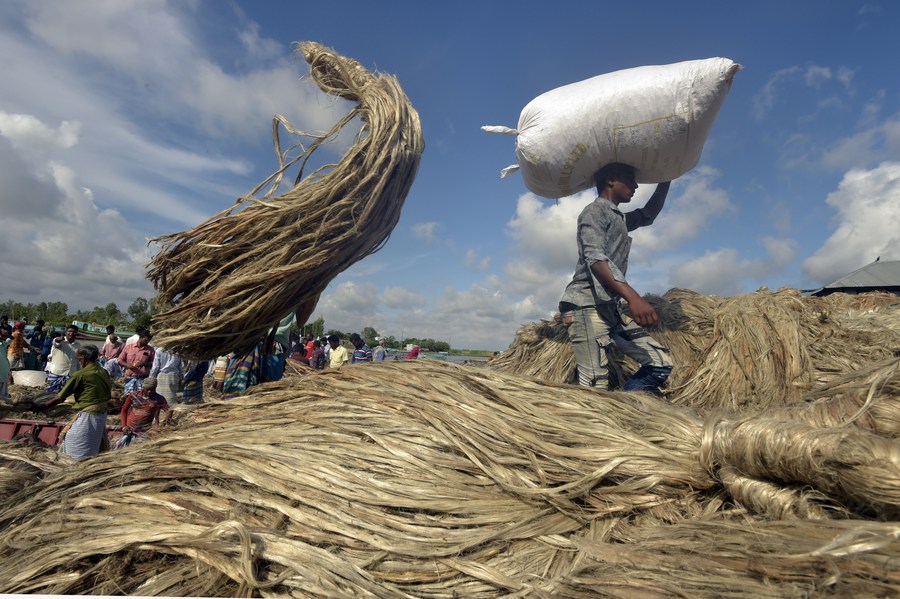
Essentially, this material represents the evolution of the Golden Fiber. By taking the traditional strength of Indian jute and applying modern bio-chemistry, innovators have created a textile that mimics the premium feel of leather without the environmental guilt. Consequently, the world is starting to look at jute not just as a packaging tool, but as the high-tech fabric of the future.
To understand why jute leather is such a big deal, we first need to look at what it is replacing. Traditional leather production is one of the most chemically intensive processes on earth. Tanning a single hide requires massive amounts of water and toxic heavy metals like chromium. Furthermore, these chemicals often leak into river systems, poisoning local communities.
On the other hand, the rise of “fast fashion” gave us PU (polyurethane) and PVC (polyvinyl chloride) leathers. While these are animal-free, they are essentially petroleum-based plastics. They don’t breathe, they crack within a year, and they shed millions of microplastics into the ocean. Therefore, we desperately needed a material that was both plant-based and high-performing. This is where the magic of jute comes into play.+1
You might be wondering how a coarse, fibrous plant like jute can possibly feel like soft leather. The secret lies in a process called bio-lamination. Specifically, manufacturers take a high-density jute fabric base and treat it with bio-based resins extracted from plant oils or natural rubber.
Surprisingly, the result is a material that is incredibly flexible and smooth to the touch. Because the core of the material is still the natural jute fiber, it retains the incredible tensile strength that the Golden Fiber is famous for. In addition, designers can emboss the surface to mimic the grain of cowhide, ostrich leather, or even exotic skins. This level of versatility ensures that jute leather can compete in the luxury market.
Furthermore, we must acknowledge that jute is inherently superior to many other natural fibers. Growing jute requires virtually no pesticides or fertilizers. It survives on rainwater alone, which makes its water footprint significantly smaller than that of cotton.
Moreover, jute plants are carbon-hungry. During their 120-day growth cycle, they absorb tons of CO2 and release oxygen at a rate much higher than most trees. As a result, every square meter of jute leather produced is actually helping the planet breathe. When we use jute, we are working with nature rather than against it.
One of the biggest complaints about plastic-based vegan leather is that it peels. We have all had a favorite “faux leather” jacket that started flaking off after a few months. In contrast, jute leather is built for longevity.
Because jute fibers are among the strongest natural fibers in existence, the material doesn’t lose its integrity over time. It can withstand heat, friction, and moisture much better than synthetic alternatives. Consequently, products made from jute leather—whether they are boots, bags, or belts—are investments that last for years. This means less waste in our landfills and better value for the consumer.
India is the global leader in jute production, and it is only natural that we lead the innovation in jute leather as well. For generations, Indian artisans have understood the nuances of weaving and treating this fiber. Today, that heritage is meeting modern technology.
By leveraging our massive jute fields in West Bengal and Bihar, Indian startups are now creating bio-leather that is being exported to fashion houses in Milan and Paris. Specifically, the “Make in India” movement has encouraged local mills to upgrade their machinery. Therefore, we are no longer just exporting raw jute; we are exporting high-value, finished luxury materials. This shift is providing better wages for farmers and creating thousands of jobs in the green tech sector.
While the fashion industry is the biggest adopter of jute leather, its potential reaches much further. For instance, the automotive industry is currently under pressure to reduce the weight of vehicles to improve fuel efficiency. jute leather is significantly lighter than animal hide, making it an ideal choice for car seat covers and door panels.
In addition, the home decor industry is embracing jute leather for upholstery. Imagine a sofa that looks like vintage leather but is made entirely from sustainable jute. It’s hypoallergenic, easy to clean, and brings a warm, organic texture to any room. Moreover, the e-commerce sector is looking at jute leather for premium packaging, replacing plastic-lined boxes with reusable, biodegradable alternatives.
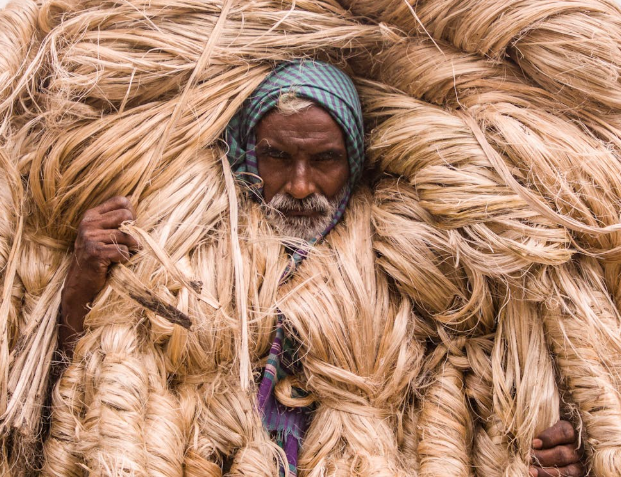
We cannot talk about jute without talking about the people who grow it. In India, the jute industry is a lifeline for millions of small-scale farmers. By increasing the demand for high-value products like jute leather, we are ensuring that these farmers receive a fair price for their labor.
Furthermore, the production of jute leather often involves local artisan communities. These are people who have spent their lives working with the Golden Fiber. As a result, this new industry is helping to preserve traditional craftsmanship while giving it a modern, global platform. Ultimately, choosing jute is an act of solidarity with the rural workers of India.
A common question people ask is: “What happens when I’m done with my jute leather bag?” Unlike plastic leather, which stays in a landfill for 500 years, jute leather is designed for a circular economy. Since it is composed of plant fibers and bio-binders, it is much more biodegradable than any synthetic alternative.
While it is tough enough to last for a decade of use, it won’t haunt the planet forever. Instead, it can eventually be broken down and returned to the earth. Truly, this is the definition of a “cradle-to-cradle” material. In fact, many researchers are now working on even more advanced versions of jute leather that are 100% home-compostable.
Of course, no journey is without its obstacles. Scaling the production of jute leather to meet global demand requires significant investment in infrastructure. However, the interest from global investors is at an all-time high.
Additionally, there is the challenge of consumer perception. For a long time, people associated jute with “cheap” sacks. But, as more luxury brands showcase the beauty of refined jute leather, that perception is changing fast. People are starting to realize that true luxury isn’t about the price tag; it’s about the story behind the material and its impact on the world.
Ultimately, the rise of jute leather is proof that we don’t have to destroy our planet to live comfortably. We have had the solution all along, growing in our fields and swaying in the Indian monsoon. The Golden Fiber has found a new life, and it is more beautiful than ever.
By embracing jute leather, we are choosing a path that respects the earth, supports the farmer, and delights the consumer. It is a win-win-win situation. The next time you see a beautiful leather-like product, ask yourself: Is it plastic, is it animal, or is it the future? If it’s made of Indian jute, you know you’ve made the right choice.